Guide
Sub-Zero Alternatives: How Other Built-Ins Compare
A fair look at Sub-Zero alternatives like Thermador, Miele, Viking and True Residential, plus Classic vs Designer vs Pro, reliability and service.
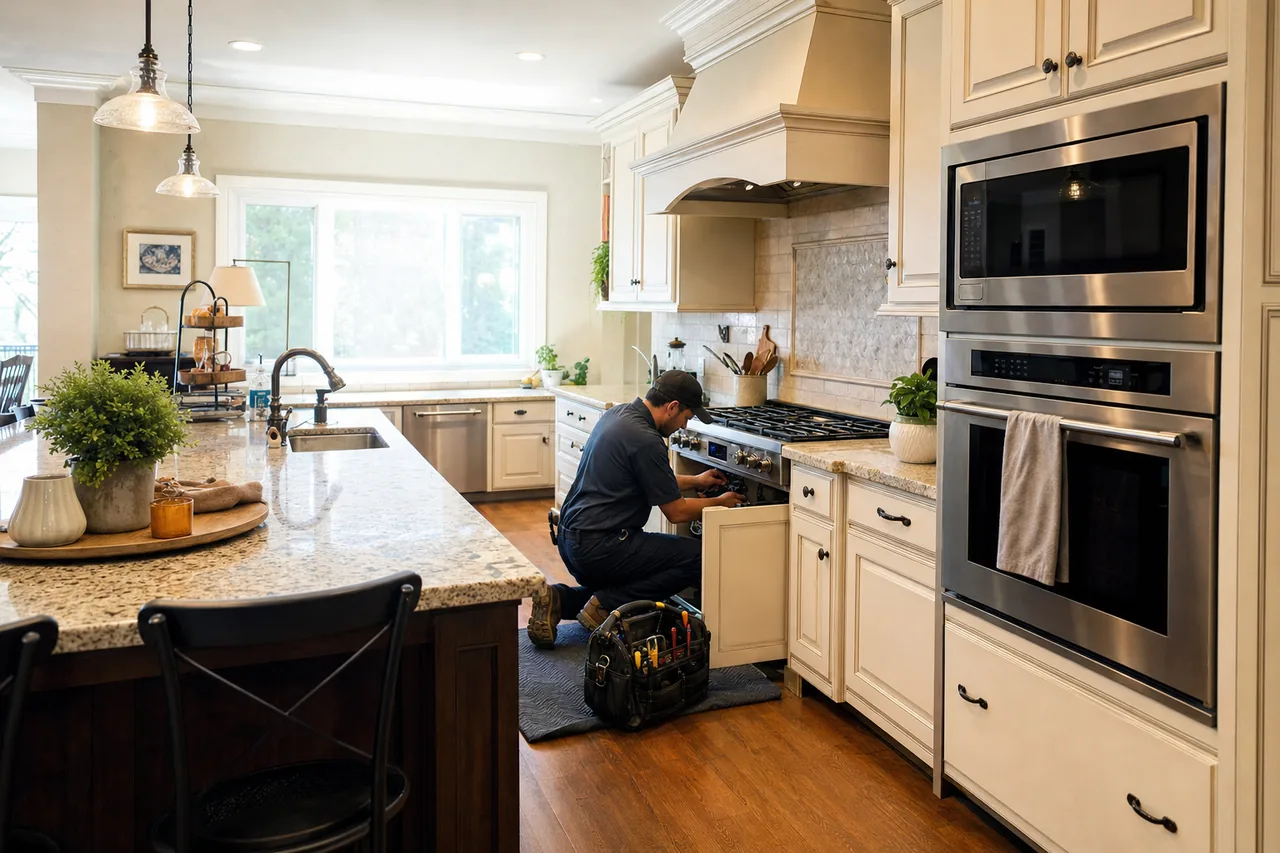
The closest Sub-Zero alternatives for a built-in kitchen are Thermador, Miele and Gaggenau column refrigerators, Viking and JennAir built-ins, and True Residential for a commercial look. Every one of them can hold fresh food at 37°F and the freezer at 0°F, so the real differences are construction, how the cooling is split, and how easy the unit is to service ten years from now.
Below is a fair side-by-side on design and ownership, plus how the Sub-Zero series differ.
Which brands are realistic Sub-Zero alternatives?
A realistic alternative has to fit a built-in opening, take custom panels or a stainless front, and sit flush with the cabinets:
- Thermador: column refrigerators and freezers that pair in many widths, panel-ready or stainless.
- Miele: fully integrated columns with a cabinet-matched European look.
- Gaggenau: high-end integrated columns for minimalist kitchens.
- Viking: one of the few brands that makes both refrigeration and cooking, with professional-style stainless built-ins.
- JennAir, KitchenAid, Bosch and Dacor: built-in and column models usually priced below Sub-Zero.
- True Residential: stainless and glass-door refrigeration with commercial-kitchen roots.
In Chappaqua, from Old Chappaqua colonials to houses in Lawrence Farms, a replacement usually has to fit an opening framed for the previous unit. Built-ins commonly come in 36-, 42- and 48-inch widths, so measure the cabinet opening, not the old refrigerator.
How do Sub-Zero Classic, Designer and Pro differ?
Within the brand, the three series are mostly about look and fit:
- Classic is the traditional built-in with a visible grille across the top, in stainless or panel-ready form.
- Designer is fully integrated: flush, panel-ready, no visible grille, and it includes the column refrigerator and column freezer units.
- Pro is heavy stainless with a commercial look and a glass-door option.
Sub-Zero’s full-size combination models use dual refrigeration, meaning separate cooling systems for the fresh-food and freezer sides. That keeps dry freezer air away from produce and stops odors from traveling. More is on our Sub-Zero page.
How does True Residential compare with Sub-Zero?
True Residential grew out of commercial refrigeration: heavy stainless cabinets, glass doors, bright lighting and quick pull-down cooling. It suits a bar, butler’s pantry or showcase kitchen. Sub-Zero leans toward the hidden, cabinet-matched kitchen. Neither is wrong, but a glass door lets in more heat than a solid door, so the compressor runs a little more. See our True Residential page.
What should you compare besides the front panel?
| Factor | Sub-Zero | Most alternatives | Question to ask |
|---|---|---|---|
| Cooling layout | Separate systems for fresh food and freezer on full-size combination models | Column pairs run one system per column; some combination models share one compressor | If one system fails, does the other keep running? |
| Where it breathes | Grille at the top on Classic and Pro | Top grille or toe-kick, depending on brand | Can I reach the condenser coils to clean them? |
| Look and fit | Panel-ready or stainless across three series | Panel-ready or stainless | Will it fit my opening and my current panels? |
| Wear parts | Gaskets, ice maker, defrost parts, fans | The same list | How quickly do these parts arrive? |
| Service | Built to be repaired in place | Varies by brand and design | Who repairs this brand locally? |
What wears out on any premium built-in?
Reliability patterns look similar across brands because the parts do the same jobs. Dusty condenser coils make the compressor run hot, so clean them once or twice a year. Door gaskets flatten or tear and let frost build up. Ice makers and water valves are frequent failures. A failed defrost heater or thermostat leaves the freezer coil packed with ice. A sealed-system leak is the least common fault and the most expensive.
What do repairs typically cost, whichever brand you pick?
These are typical ranges, not quotes; the firm quote is given on site after diagnosis:
- Diagnostic / service call: $95–$149
- Common refrigerator faults: $300–$750
- Door gasket / seal replacement: $150–$450
- Ice maker repair: $250–$650
- Defrost heater / defrost thermostat: $320–$550
- Sealed-system / compressor repair: $800–$2,200
The full list is on our repair pricing page. New Castle Premium Appliance Repair is an independent service, not manufacturer-authorized, and works on Sub-Zero and the alternatives above. Call (914) 340-0898.
Frequently asked questions
What is the closest alternative to a Sub-Zero built-in?
For a flush, panel-ready look, Thermador, Miele and Gaggenau columns come closest. For a stainless professional look, Viking and True Residential are the better match.
Is Sub-Zero Classic or Designer better?
Neither cools better as a rule; the choice is about look and fit. Classic shows a grille and suits a traditional built-in, while Designer disappears behind cabinet panels.
Should I repair my Sub-Zero or replace it with an alternative?
If the cabinet and sealed system are sound, repair usually wins, with common faults in the typical $300–$750 range. A sealed-system repair at $800–$2,200 is the point where weighing a replacement makes sense.